Travel and exercise
When you travel to Europe with your son, who works out daily and is a seasoned European traveler, you’d better be ready to hit the cobblestones. Mind the gap, cabs, rented scooters, electric bikes, (if you’re in the UK they’re coming from the wrong direction and will blindside you) and be prepared to put in the miles.
Everything you do involves moving from point A to point B. Airports, trains, buses, cabs, UBER, electric bikes, scooters, and walking as you travel to sightsee, eat, sleep, party, etc. Getting to the airport, and when you arrive at your destination, getting from the airport to where you will be staying. Just getting out of the airport involves walking and not just any walking, airport walking.
Airport walking
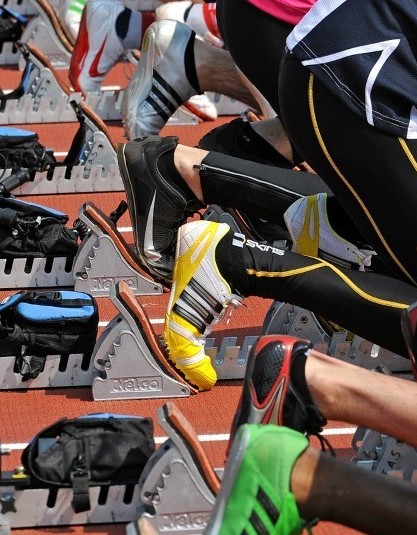
Airport walking, you know what it is. All passengers get into their “blocks” as soon as the plane stops at the terminal. Wanting to escape the confines of this flying corporate tube they poise themselves in their blocks to ensure a speedy departure.
Rather than hearing “on your mark” you’ll hear “flight attendants cross check.” I’ve always wondered just exactly what a cross check was, and for mine and your benefit I Googled cross check and discovered: “Before departure or arrival, flight attendants perform a “cross check.” This process involves double-checking that the aircraft doors are properly armed or disarmed before opening. If the doors are armed, then an inflatable escape slide or raft will deploy when opened during an emergency. If unarmed, nothing will happen when the door is opened. (Doors must be unarmed for passengers to embark and disembark the plane.) To perform a cross check, the flight attendant either locks or unlocks a special level before sliding it to the appropriate side.”
https://dailypassport.com/flight-attendants-secret-language-how-to-decode/
Immediately after the cross-check is completed it will be safe to open the aircraft door without deploying the inflatable emergency slide and probably knocking an airline employee, outside of the airplane, to the next gate.
Once the door is open the race is on. Off the plane and into the terminal. It’s an obstacle race as passengers coming and going duck and dodge as they avoid other travelers coming from all directions. Slow walkers, waddlers, fast walkers, walkers, and strollers, families, and gen Z’ers with their faces in their phones, and geezers like me with their faces searching desperately for signs directing the way out, the water closet, or connecting flight. Remember your airport walking skills. You may think that they were finely tuned as you began and ended your flight but don’t fool yourself, you’re not done yet.
You’re out of the airport! Now what? Where are you headed and how are you going to get there? If someone is picking you up EZPZ, you’ve just got to find them in the maze of locations designated to load you. If you’re headed to a hotel, hostel, air B&B, VRBO or your cardboard box how are you going to get there?
Tap & Pay contactless credit cards
Stop! Before you travel abroad take the time and if you don’t have one get a tap and pay contactless credit card. Here’s a link to a blog post with good advice about the best tap and pay contactless credit cards.
Best contactless credit cards: Tap to pay by Madison Blancaflor written on December 12, 2020.
https://thepointsguy.com/credit-cards/credit-cards-contactless-payments/
Why a tap and pay contactless credit card you ask? A lot of public transportation enables you to tap and pay upon boarding buses, metros, trains, etc. You save time and money by not having to stop at the ticket booth; there are lines of unknowing travelers waiting to pay a higher ticket price for the same trip. While you can swipe your card in cabs, at hotels, and restaurants it is much more convenient to tap, pay, and go.
Another reason to have a physical card . . . You may be one of those tech savvy individuals with your cell phone or watch configured to tap and pay. There are times, like when you’re renting a motorcycle to ride to Monaco, where the rental company requires a physical card. Travel prepared for anything and bring multiple credit cards, and contingencies to get you home.
If you are blessed to have a son like mine your major travel worries are over. Pre-purchased tickets for trains, hotels, air B&Bs booked and paid for enabled us to travel without worry where we would lay our heads for the night. Pre-loaded apps for Uber, and bicycle/scooter rentals, enabled us to enjoy many travel options to navigate us to sight see, eat, or sleep.
But mostly there was walking. I opted for a backpack. I did not want to drag a roller bag up and down cobblestone streets, stairs, curbs, medieval impediments, new construction, or any number of obstructions to tiny fragile wheels. I didn’t want to struggle any more than necessary. I paid for a premium travel backpack, and it was worth every penny.
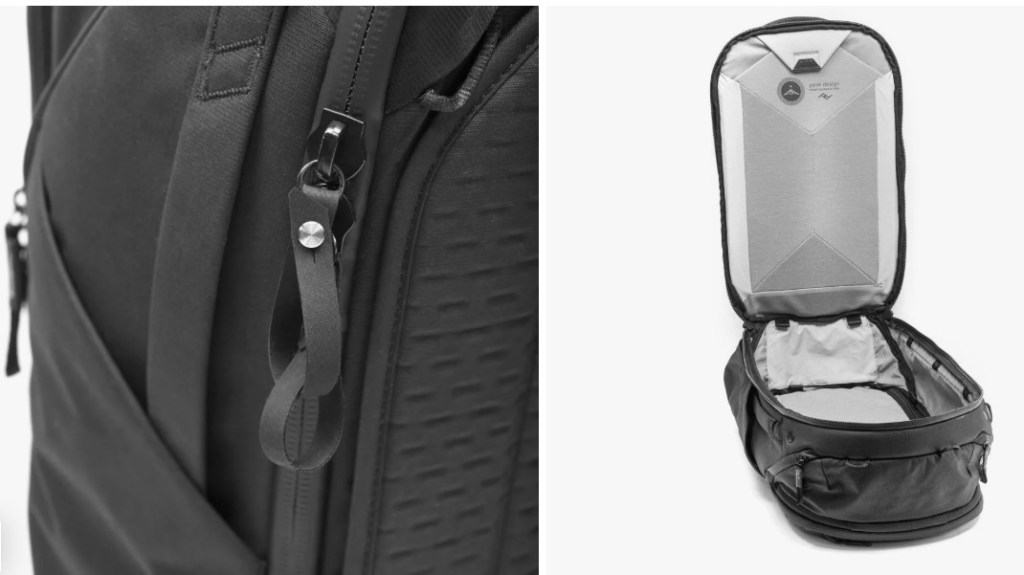
Everywhere you walk will be uphill or upstairs. The good thing was my backpack held two weeks of clothing. The bad thing was that my backpack held two weeks of clothing. Two weeks of clothing are heavy. Which brings up yet another aspect of travel.
Shipping stuff home
My beautiful wife who opted to stay home told me to ship stuff home because it was cheap and easy. Getting ready to move from northern Europe where it was cool and wet to southern Europe where it was hot and sunny I decided to ship my sweatpants, sweatshirt, and long sleeve shirts home. These were articles of clothing that I brought from home. As of this writing, I have not received my clothes. They are held up waiting for me to pay an almost $600 duty bill. The company’s one 800 customer service number doesn’t work. Communication to the International shipping company has been through an Internet app. advising that someone would make contact by email within the next four days.
I don’t know where we went wrong in the shipping but educate yourself about shipping stuff home before you get burned.
Back to walking
Prepare to walk a lot. Forget fashion. Wear comfortable shoes to walk in. There are lots of athletic shoes with good support and cushioning to save your feet, ankles, knees, and aching back. Before you leave home, throw a couple of 50# dumb bells into your backpack and walk around your neighborhood, local park, or Boston marathon route.
Hone your airport walking skills. You will need them to be finely tuned to avoid getting taken out by a bicycle, scooter, cab, or Gen Z’er backing out of a parking space while texting on their cell phone. If I could see myself in their backup camera why couldn’t they?!
Orient yourself to what direction the traffic flows. If you’re from the good ole USA you’re used to looking right to left before crossing a street. If you’ve in the UK or commonwealth, you’ll get flattened.
After settling in at your hotel, hostel, air B&B, VRBO, or cardboard box now what?
You’re probably hungry. What to eat? What are you hungry for? I don’t know what are you hungry for? And so, begins the debate so familiar as the question arises daily with your fellow co-workers . . . where to eat.
Unless you have specific food allergies, restricted diet options, or simply a picky eater the options are infinite. When in Rome . . . sample cuisines unique to your host region. Two London police officers insisted I try the Haggis with whiskey sauce while in Scottland. They revealed evil smiles as they made this recommendation. I felt like they tipped their hands when they added the “whiskey sauce.” I felt that this mind-numbing condiment was necessary to negate the sheep’s heart, liver, lungs, and stomach part of this tasty dish. Wikipedia adds that this dish is also served with “neeps and tatties.” Ensure you know what you are consuming as you sample the regional fare. In this case it seems that neeps and tatties are simply mashed turnips and potatoes.
I did brave Scottland’s macaroni and cheese pie while at “the turn” in St. Andrews. I’ll only say that this is something that I would eat again and leave it at that.
https://en.wikipedia.org/wiki/Haggis
Once again, my son to the rescue as he showed me two options to navigating foreign restaurants. This first being Google Translate. If you’ve brought your smart phone to the restaurant open the Google Translate app. Tap the camera icon and viola. Hold your phone over the menu until Google does its magic. Take a photo of the menu and read the English version of the menu from your phone.
Option two is look at the table where you are seated. Many restaurants have a QR code on the table. Scan the code from your phone and again, viola you’ll see the menu in English. If you are not technological no worries. The menus often have English subtitles and as a last resort your waiter generally speaks English!
An old history professor admonished our class that he was a “Scott” not to be confused with Scotch the alcohol. He also told us “when you go” as opposed to “if you go.” Well, I’ve gone. Fifty years later I remember my Scottish professors words as I traversed the Scottish highlands, Edinburg Castle, and Royal Mile. I’ve crossed the 700 year old Swilican Bridge at St. Andrew’s 18th hole . . . the home of golf.
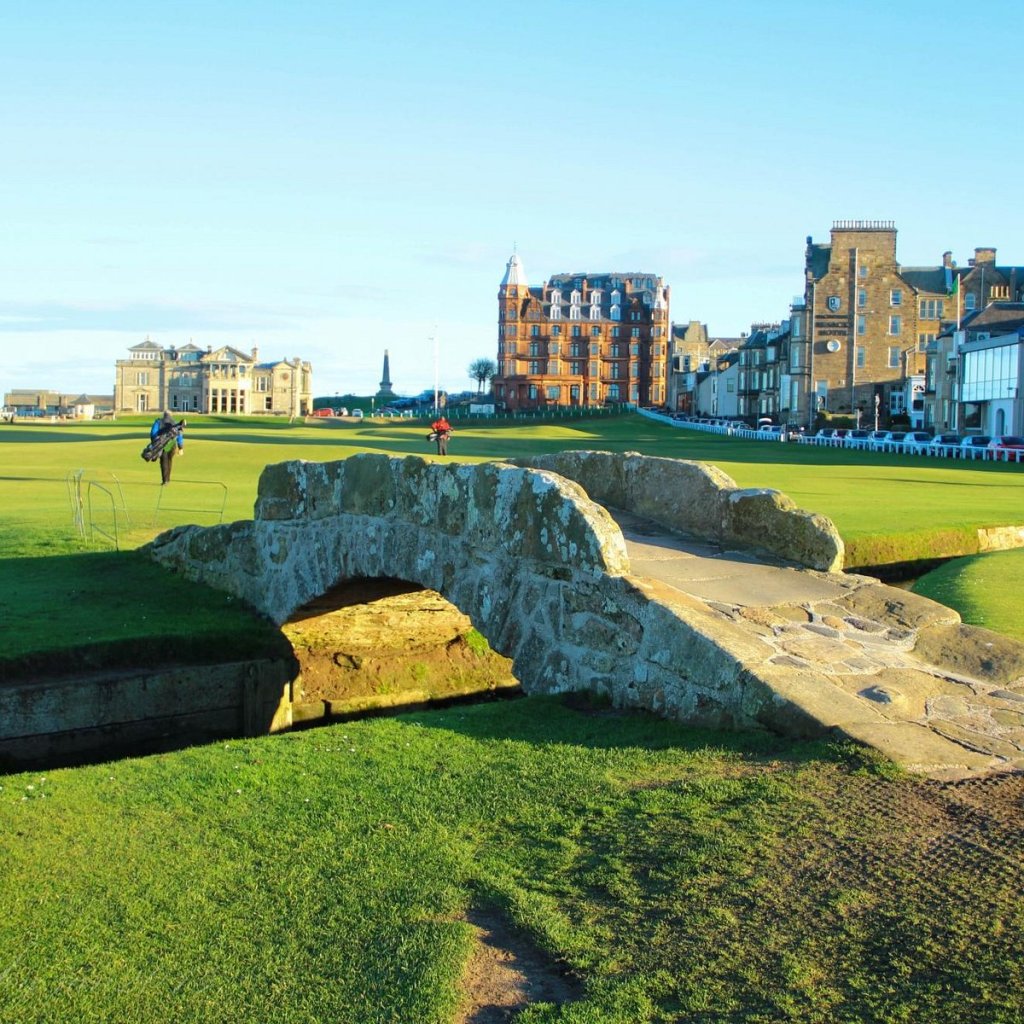
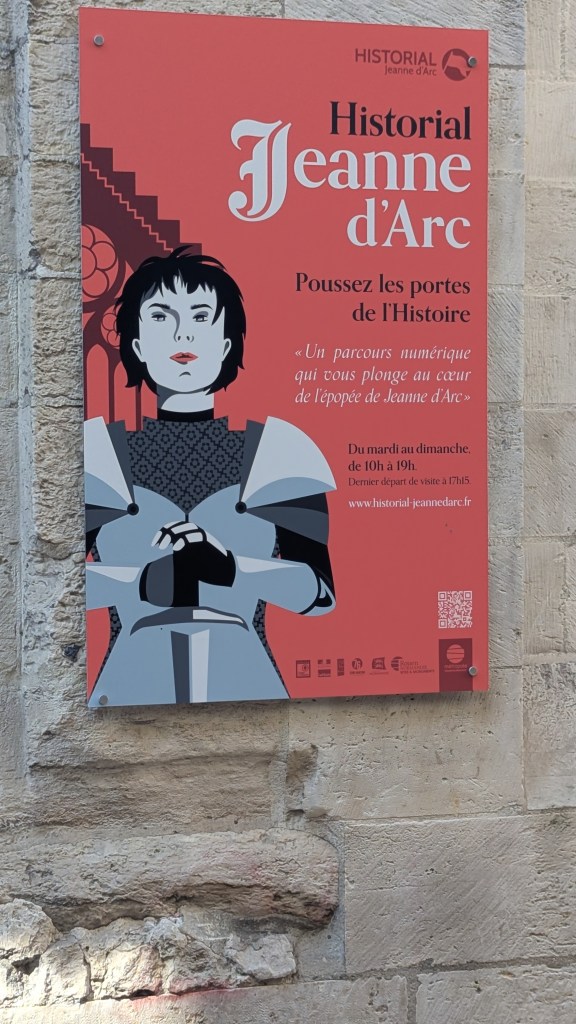
My European adventure did not end there. I visited where Joan of Arc was tried and burned at the stake in Rouen France, part of Normandy.
“Very few people know that Mark Twain (Samuel Clemens) wrote a major work on Joan of Arc. Still fewer know that he considered it not only his most important but also his best work. He spent twelve years in research and many months in France doing archival work and then made several attempts until he felt he finally had the story he wanted to tell. He reached his conclusion about Joan’s unique place in history only after studying in detail accounts written by both sides, the French and the English. Because of Mark Twain’s antipathy to institutional religion, one might expect an anti-Catholic bias toward Joan or at least toward the bishops and theologians who condemned her. Instead one finds a remarkably accurate biography of the life and mission of Joan of Arc told by one of this country’s greatest storytellers. The very fact that Mark Twain wrote this book and wrote it the way he did is a powerful testimony to the attractive power of the Catholic Church’s saints. This is a book that really will inform and inspire.”
A very small garden and plaque marks where Joan drew her last breath in becoming France’s patron saint. It was worth the pilgrimage there to visit amazing history.
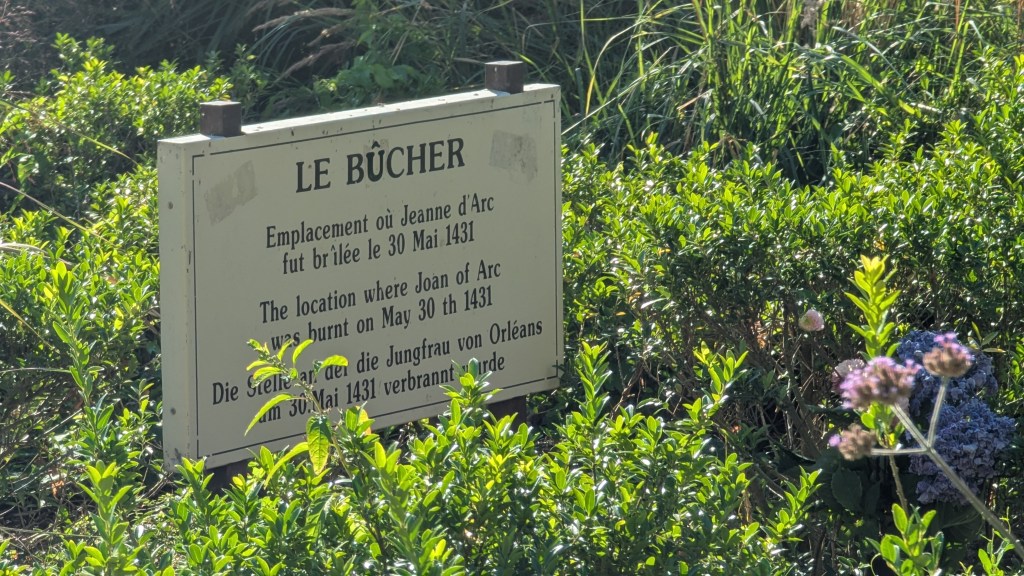
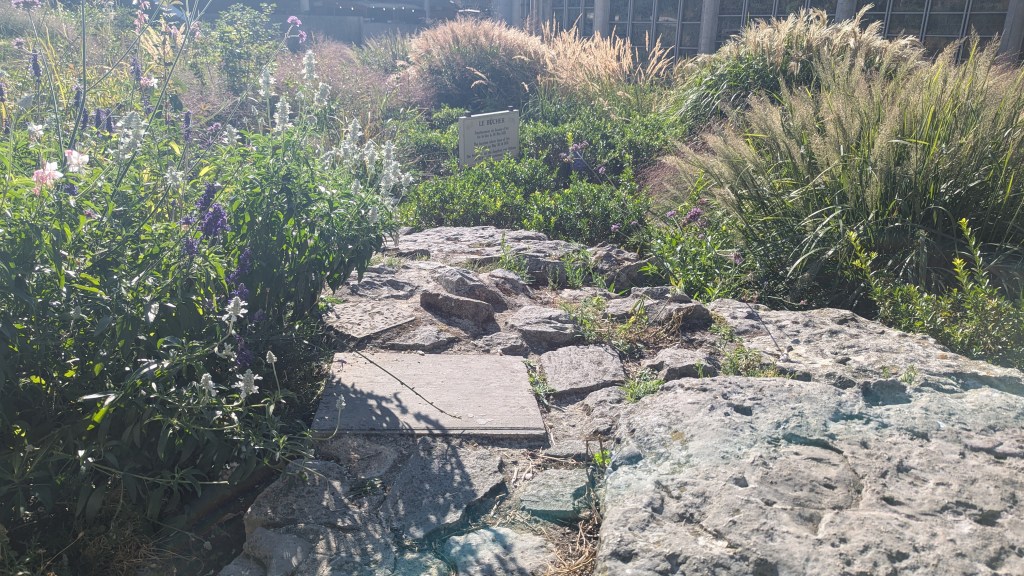
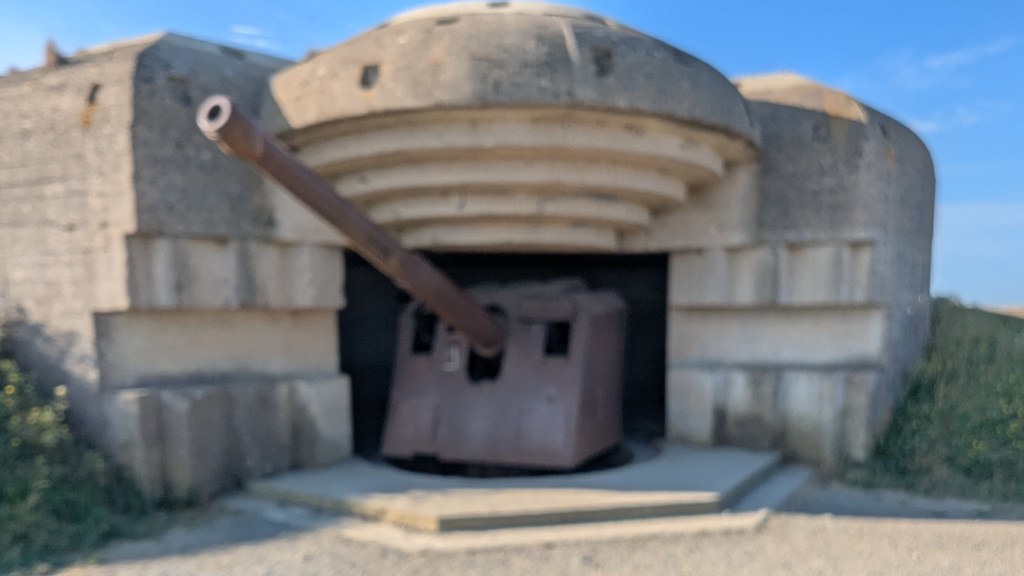
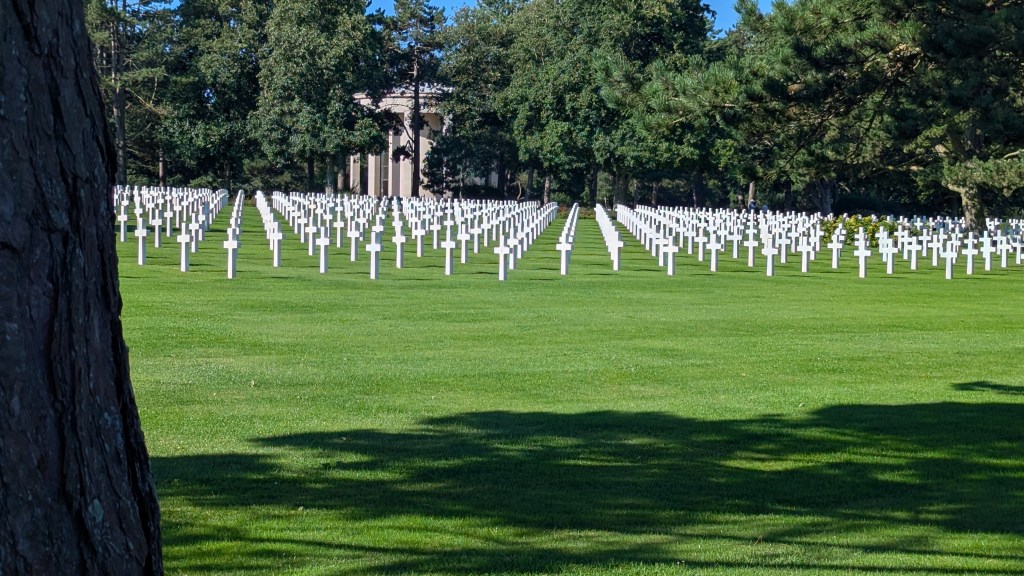
Not far from Rouen in another part of Normandy, much younger than Joan’s sacrifice in 1431 was Hitler’s Atlantic Wall which still stands but was no match to the Allied move on June 6, 1944 to end Nazism’s reign of terror. Utah, Omaha, Gold, Juno, and Sword were the names of Normandy beaches where so many fought and died for. Normandy holds much history that you must experience . . . when you go.
 Life with Cancer
Leave a comment